
Last Updated: 2026 | Distance: ~210–235 km | Duration: 4–7 hrs | Starting Fare: ₹3800
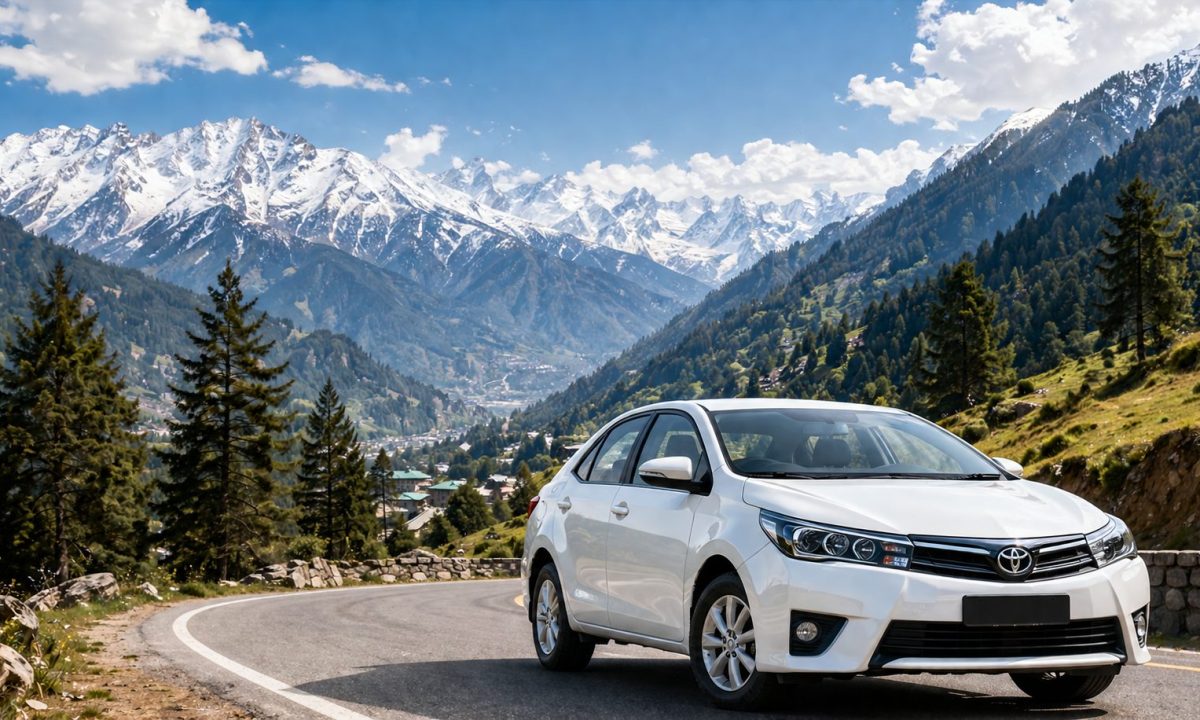
There are journeys you take simply to reach a destination, and then there are journeys that become the destination themselves. The road from Dharamshala to Manali belongs firmly to the second kind. It is one of the most scenic drives in all of Himachal Pradesh — a route that winds through tea-covered hills, ancient temples, wide mountain valleys, and stretches where the Beas River runs alongside you like a quiet companion.
Choosing the right taxi service from Dharamshala to Manali is not a small decision. On mountain roads that demand experience, in terrain where conditions can shift suddenly, and over a journey that stretches for four to seven hours, your choice of travel shapes every single moment. A good cab doesn’t just take you from point A to point B — it gives you the freedom to travel at your own pace, the safety of a skilled driver, and the comfort of a well-maintained vehicle as the mountains unfold around you.
At Groove Taxi Services, we have been helping travelers experience this route the right way — comfortably, safely, and on their own terms. Whether you’re a family on a summer holiday, a couple seeking a quiet mountain escape, a group of friends chasing adventure, or a solo traveler looking for a peaceful journey through the hills, our Dharamshala to Manali cab service is designed to meet your needs without compromise.
📞 Ready to Book? Request a Free Quote or call us directly for instant pricing on your preferred vehicle.
Overview of the Dharamshala to Manali Route
The journey from Dharamshala to Manali covers a road distance of approximately 210 to 235 kilometers, depending on the route chosen and any detours taken along the way. At first glance, that distance might seem manageable — even quick. But mountain travel follows a different rhythm than highway driving. Roads narrow and wind through hillsides, descend into valleys, and rise again through passes. The typical travel time for this route ranges from 4 hours on a clear, uncrowded day to as many as 7 hours when traffic is heavy near Manali during peak tourist season or when weather slows things down in the passes.
What this means practically is that the journey requires comfortable seating, a driver who knows the road well, and the flexibility to take breaks without stress. It is not a journey to rush. It is a journey to absorb.
As you leave Dharamshala behind, the landscape shifts gradually but beautifully. The town’s energy, its Tibetan prayer flags fluttering in the breeze, and the noise of McLeod Ganj slowly give way to open roads lined with trees. The first major stretch takes you through Palampur, one of Himachal Pradesh’s most charming and underrated towns. Here, the road runs alongside endless tea gardens — neat, ordered rows of deep green plants blanketing the hillsides in patterns that feel almost mathematical against the wildness of the mountains.
Past Palampur, the route curves toward Baijnath, a small town that carries centuries of history in its temples and stone carvings. The Baijnath Temple, dedicated to Lord Shiva, is one of the oldest and most architecturally significant temples in Himachal Pradesh. Travelers who stop here often find themselves unexpectedly moved by the stillness of the place — the contrast between the ancient stone and the surrounding mountain landscape creates a feeling that is difficult to describe but easy to remember.
Moving further along, the road opens into the wider landscapes around Jogindernagar, where valley views begin to stretch out in every direction. This is the kind of scenery that makes passengers reach instinctively for their cameras — broad, sweeping vistas of green hills under wide skies, the sense of being suspended between valleys.
The final stretch into Kullu and then up toward Manali brings the journey to a kind of natural crescendo. The Beas River, which has been a companion for much of the drive, grows louder and more dramatic here. The valley narrows and the mountains rise higher on either side. By the time you roll into Manali, you will have experienced one of the finest mountain drives in India — and if you traveled in comfort, every kilometer of it will have felt like a privilege.
🔗 Also Read: Best Taxi Service from Dharamshala to Shimla | Dharamshala to Delhi Cab Booking
How to Reach Dharamshala
Before your Dharamshala to Manali taxi journey begins, you need to get to Dharamshala itself. The town is well-connected by multiple modes of transport, and your choice of how you arrive can set the tone for the rest of your Himachal holiday.
By Air — The Fastest Option
The nearest airport to Dharamshala is Kangra Airport, also known as Gaggal Airport, located approximately 13 to 15 kilometers from the main town. The airport receives regular flights from Delhi and Chandigarh, and during peak tourist season, connectivity tends to improve with additional services on certain routes.
Flights from Delhi to Kangra typically take just under an hour, making air travel the fastest option for those coming from the capital or other major metros. Once you land, the journey to Dharamshala town takes around 30 to 40 minutes by local taxi from the airport, depending on traffic. The airport road itself offers your first proper glimpse of the hills — a gentle, scenic introduction to what lies ahead.
One important consideration: flights to small hill airports can be sensitive to weather. Fog, low clouds, or rain can lead to delays or cancellations, especially in winter. Travelers with tight schedules sometimes prefer the reliability of road travel for this reason.
By Road — A Scenic and Flexible Journey
Road travel is one of the most popular and accessible ways to reach Dharamshala. The town is connected by well-maintained national and state highways to cities including Delhi, Chandigarh, Pathankot, and Amritsar.
From Delhi, the distance is approximately 475 to 490 kilometers by road, and the journey typically takes 9 to 11 hours depending on the route and traffic conditions. Most travelers prefer an overnight journey, departing in the evening and arriving in Dharamshala the following morning.
From Chandigarh, the journey is much shorter — around 230 to 250 kilometers — and can be completed in 4 to 5 hours.
Both government-run Himachal Pradesh Road Transport Corporation (HRTC) buses and numerous private bus operators run services to Dharamshala. Overnight sleeper buses are popular and relatively comfortable, though they follow fixed schedules and do not offer the flexibility of stopping where you choose.
For travelers who want more control over their journey, a private cab from Delhi or Chandigarh to Dharamshala is a much better option — comfortable, door-to-door, and timed according to your preference.
🔗 Book These Routes: Taxi from Delhi to Dharamshala | Taxi from Chandigarh to Dharamshala | Taxi from Amritsar to Dharamshala
By Taxi — Door-to-Door Comfort
Hiring a private taxi remains the most convenient and comfortable way to reach Dharamshala, particularly for families with luggage, elderly travelers, or groups who want a unified experience from the moment they leave home.
A well-chosen taxi service takes away every logistical concern — no timetables to chase, no transfer points to navigate, no overhead racks to wrestle luggage into. Your driver arrives at your door, loads the bags, and the journey begins on your terms.
For travelers who plan to continue onward to Manali after spending time in Dharamshala, some services — including Groove Taxi Services — allow you to book the entire multi-leg journey together, so you have consistency of service and pricing throughout your trip.
Taxi vs Bus vs Self-Drive — Which Travel Option is Right for You?
When planning a Dharamshala to Manali journey, most travelers find themselves weighing three options: taking a bus, renting a self-drive vehicle, or hiring a private cab. Each has its strengths, but the differences become much clearer once you understand what mountain travel on this route actually demands.
| Factor | Taxi (Recommended) | Bus | Self-Drive |
|---|---|---|---|
| Comfort | ✅ High | ❌ Limited | ✅ High |
| Flexibility | ✅ Full | ❌ Fixed schedule | ✅ Full |
| Mountain Road Safety | ✅ Expert driver | ⚠️ Varies | ❌ Challenging for beginners |
| Luggage Space | ✅ No restrictions | ❌ Limited | ✅ Varies |
| Group Coordination | ✅ All in one vehicle | ❌ Separate seats | ❌ Multiple cars needed |
| En Route Stops | ✅ Anytime, anywhere | ❌ Designated stops only | ✅ Freely |
| Best For | Families, couples, groups | Solo budget travelers | Experienced hill drivers |
Why Bus Travel Falls Short on This Route
Bus travel is undeniably the most economical option for this journey, and for solo travelers on tight budgets, it remains a practical choice. HRTC buses and several private operators run services between Dharamshala and Manali, typically via Mandi or Kullu.
However, comfort on this route matters considerably more than it might on a flat highway journey. Mountain roads demand a different kind of endurance — the constant curves, the altitude changes, the long duration. Bus seats, particularly on older vehicles, do not always provide adequate lumbar support for a 6 to 7-hour journey. Legroom can be tight, and the fixed stopping points mean you cannot pause for food, photography, or a simple stretch of the legs whenever you need.
For families with children, senior travelers, or anyone prone to motion sickness, the bus experience can range from uncomfortable to genuinely unpleasant. The limited flexibility also means missing some of the best scenic stops along the route.
Why Self-Drive Demands Caution
Self-driving through Himachal Pradesh has a romantic appeal that is difficult to argue with. There is something deeply satisfying about being behind the wheel on mountain roads, feeling in complete control of the journey. And in theory, self-drive offers maximum freedom.
In practice, however, mountain driving is a very different skill set from urban or highway driving. The roads between Dharamshala and Manali include sharp hairpin turns, stretches where two vehicles can barely pass each other, sudden patches of gravel or road damage, and in certain seasons, ice and snowmelt that make surfaces slippery without obvious warning.
Experienced Himachal drivers know where to position the vehicle on a narrow curve, when to slow before a blind corner, and how to read the road surface ahead. For those unfamiliar with these conditions — even confident city drivers — the strain of constant concentration over a 4 to 7-hour drive can be exhausting and potentially dangerous.
If you are an experienced mountain driver who has navigated similar terrain before, self-driving is a completely valid option. If not, the peace of mind that comes from a professional driver is worth every rupee.
Why Taxi is the Best Choice for Most Travelers
A private cab service from Dharamshala to Manali combines the best of both worlds — the comfort and privacy of your own vehicle, with the safety and ease of an experienced driver. You don’t have to follow anyone else’s schedule, you don’t have to share space with strangers, and you don’t have to worry about navigating roads you’ve never driven before.
You can stop at the Palampur tea gardens for fifteen minutes of quiet walking. You can pause at Baijnath Temple and spend half an hour inside without feeling rushed. You can pull over simply because the river view was too beautiful to drive past. These are the moments that define a mountain journey, and they are only fully available to you when you travel by private taxi.
For families, the value is even more obvious. Children can stretch, sleep, and move around within the vehicle. Parents don’t have to worry about luggage, timings, or connection points. The driver handles everything that isn’t scenery and conversation.
Why Choose a Taxi Service from Dharamshala to Manali?
The case for hiring a private taxi goes beyond simple convenience. It speaks to a different philosophy of travel — one where the journey is treated as part of the experience rather than a logistical inconvenience.
Complete Flexibility on Your Schedule
With a private Dharamshala to Manali taxi, your departure time, your break points, and your pace are entirely yours. Want to leave at 5:30 AM to catch sunrise over the Dhauladhar range before setting off? Done. Want to stop for a long, unhurried lunch in Palampur? Not a problem. Want to take a detour through a village because it looked interesting from the road? Your driver will accommodate you.
This flexibility transforms the nature of the journey itself. Instead of watching the clock against a bus schedule, you watch the landscape. Instead of managing your comfort around fixed stops, you stop whenever comfort demands it.
Experienced Drivers Who Know the Road
The drivers at Groove Taxi Services are not just people who know how to drive — they are professionals familiar with this specific route, its seasonal variations, its traffic patterns, and its occasional challenges. They know which stretches become slippery after rain, where the roads narrow unexpectedly, and how to pace the journey to arrive comfortably within your expected timeframe.
For many travelers, especially those visiting Himachal Pradesh for the first time, having an experienced driver doubles as having a local guide. A good driver knows which roadside dhaba serves the best chai, which viewpoint is worth stopping for, and which sections of the road require extra caution on any given day.
Luggage Without Limits
Mountain travel typically means carrying more than you would for a city trip — warm layers, trekking shoes, rain gear, medications, and often shopping from previous destinations. On a bus, luggage is a constant source of stress: overhead space is limited, underseat space is cramped, and valuable bags have to go into communal holds.
In a private Dharamshala taxi, your bags go into the boot of the vehicle, stay with you for the entire journey, and are completely safe throughout. There are no restrictions, no extra charges per bag, and no anxiety about whether your luggage arrived at the right stop.
Private Space Throughout the Journey
Travel is personal, especially for families and couples. A private taxi gives you a space that is entirely yours — where you can have conversations without worrying about who is listening, where children can be noisy without embarrassment, and where you can simply be yourselves throughout the journey.
This sense of private, controlled space is particularly important on longer mountain journeys where the hours in the vehicle become a significant part of your day.
Comfort for Senior and Special Needs Travelers
Mountain roads can be physically demanding, and for senior travelers or those with physical limitations, a private taxi is not a luxury — it is a necessity. The ability to recline, adjust seating, stop at any time, and have the driver assist with boarding and alighting makes the entire journey manageable and pleasant rather than stressful and tiring.
🔗 Popular Add-Ons: Manali Local Sightseeing Cab | Taxi from Manali to Rohtang Pass | Manali to Spiti Valley Cab
Types of Taxis Available from Dharamshala to Manali
Understanding your vehicle options helps you choose the right fit for your group size, comfort expectations, and budget.
Hatchback (Up to 4 Passengers)
Compact and economical, hatchbacks like the Maruti Swift or Wagon R are a practical option for solo travelers or couples traveling light. They handle mountain roads well but have limited boot space, so they work best for short trips with minimal luggage.
Best for: Solo travelers, budget-conscious travelers, short stays
Sedan (Up to 4 Passengers)
The most commonly booked vehicle for this route. Sedans like the Toyota Etios, Honda Amaze, or Maruti Dzire offer a comfortable balance of interior space, legroom, and luggage capacity. They handle mountain roads smoothly and are well-suited to the 4 to 7-hour journey.
Best for: Couples, small families, business travelers
SUV / Innova Crysta (5–7 Passengers)
The Toyota Innova Crysta is widely considered the gold standard for mountain travel in India. Its higher ground clearance, powerful engine, and spacious interior make it exceptionally well-suited to Himachal Pradesh’s roads. For families or groups of 5 to 7, it provides a level of comfort that makes a long mountain journey feel genuinely enjoyable rather than merely tolerable.
Best for: Families, groups of 5–7, travelers prioritizing comfort
Tempo Traveller (9–15 Passengers)
For larger groups — corporate outings, extended family holidays, group tours — a tempo traveller offers the ideal combination of capacity and practicality. Modern tempo travellers are equipped with push-back seats, sufficient luggage racks, and air conditioning, making them a comfortable choice for large groups who want to stay together.
Best for: Large groups, family reunions, corporate tours
Luxury Vehicles
For travelers who want to elevate the experience, luxury options such as the Toyota Fortuner, Innova Recrystа, or premium sedans offer enhanced comfort, additional in-cabin features, and a sense of occasion that matches the grandeur of the landscape.
Best for: Honeymoon couples, business executives, premium experience seekers
Taxi Fare from Dharamshala to Manali — Complete Price Guide 2026
| Vehicle Type | Capacity | One-Way Fare | Round Trip Fare |
|---|---|---|---|
| Hatchback | Up to 4 | ₹2800 – ₹4500 | ₹5200 – ₹6500 |
| Sedan | Up to 4 | ₹3200 – ₹4200 | ₹6000 – ₹7800 |
| SUV / Innova Crysta | 5–7 | ₹4500 – ₹6500 | ₹8500 – ₹12,000 |
| Tempo Traveller | 9–15 | ₹7000 – ₹10,000 | ₹13,000 – ₹18,000 |
| Luxury Vehicle | Up to 4 | ₹8000 – ₹12,000+ | ₹15,000+ |
Prices are approximate and subject to seasonal variation. Contact Groove Taxi Services for an exact quote based on your travel dates and vehicle preference.
What Affects the Taxi Fare from Dharamshala to Manali?
1. Vehicle Type The most significant pricing factor. An Innova Crysta costs considerably more than a sedan because of its size, fuel consumption, and the comfort it provides. The right vehicle for your group size will always give you the best value.
2. Season and Demand Peak tourist months — April through June and October through November — see higher demand for taxis across Himachal Pradesh. Prices reflect this, so early booking is strongly recommended during these months. Off-season bookings (July–September, December–February) often come at lower rates, though you’ll need to weigh this against weather-related challenges.
3. One-Way vs Round Trip A round-trip booking typically offers better per-trip value than two separate one-way bookings, because the operator doesn’t need to factor in the cost of a return journey empty. If you know you’ll be returning to Dharamshala from Manali, a round-trip booking with Groove Taxi Services is worth discussing.
4. Additional Stops and Detours If you plan to visit Baijnath Temple, spend time in Palampur, or take any other detours, these extend the driver’s working time and distance and may add a small amount to the overall fare. These additions are always transparent and agreed upon before departure.
5. Tolls and Permits Certain mountain roads require toll payments, and some zones — particularly near Rohtang Pass or the Atal Tunnel — may require permits during peak season. These costs are generally communicated upfront by reputable taxi services.
💡 Pro Tip: Book a round-trip Dharamshala to Manali cab for better value and guaranteed vehicle availability for your return journey.
Best Time to Travel from Dharamshala to Manali
Timing your journey thoughtfully can dramatically improve your experience. Each season brings its own character to this route.
Summer: March to June (Best Overall)
This is peak season and for good reason. The weather is consistently pleasant, with temperatures in Dharamshala ranging from 15°C to 28°C and Manali remaining comfortably cool. Roads are in their best condition, all routes are fully open, and the landscape is lush and green. Clear skies mean mountain views are sharp and unobstructed.
The downside of summer is traffic — particularly near Manali, where tourist numbers surge in May and June. An early morning departure (6:00–7:00 AM) is strongly recommended to reach Manali before the midday traffic builds.
Monsoon: July to September
The monsoon transforms the Dharamshala to Manali corridor into something extraordinarily beautiful. The hillsides are intensely green, waterfalls cascade down rocky faces that were dry just weeks earlier, and the air is fresh and cool. For photographers and nature lovers, monsoon travel has a raw, dramatic quality that no other season can replicate.
However, monsoon travel comes with real risks. Landslides are common on mountain roads in Himachal Pradesh during this period, particularly after sustained or heavy rainfall. Road closures can occur suddenly and without much warning. Travel time may increase significantly, and some stretches may require rerouting.
If you choose to travel during monsoon, always check road conditions the evening before and morning of your journey. A reliable taxi service with an experienced driver who monitors local conditions is especially important during this season.
Autumn: October to November (Hidden Gem Season)
October and early November occupy a sweet spot that many experienced Himachal travelers consider the best time to visit. Tourist crowds thin out after the summer peak, the monsoon has cleared, and the landscape retains much of its summer greenery while the air becomes crisper and cleaner. Mountain views are often at their sharpest during this period.
Road conditions are generally excellent in October. By November, temperatures begin to drop significantly in Manali, and higher passes may start receiving early snowfall — which can itself be a draw for travelers eager to see Rohtang or Solang Valley in snow without the full winter challenges.
Winter: December to February
Winter travel from Dharamshala to Manali is a specialized experience — not for everyone, but deeply rewarding for those who seek it. Manali under snowfall is genuinely magical: the town quietens, the mountains are blanketed in white, and popular spots like Solang Valley offer snow activities without the summer crowds.
The challenges are significant. Roads can become icy and unpredictable. The Rohtang Pass may be closed or severely restricted. Travel time increases, and conditions can change rapidly. An experienced driver with a vehicle suited to cold-weather mountain driving is absolutely essential in winter. Groove Taxi Services maintains appropriately equipped vehicles and experienced drivers for winter journeys.
Scenic Highlights Along the Dharamshala to Manali Route
The journey itself holds some of the finest scenery in Himachal Pradesh. Here are the highlights worth slowing down for:
Palampur Tea Gardens
Approximately 40 kilometers from Dharamshala, Palampur announces itself with a change in the landscape. The hillsides are covered in tea plantations — Kangra tea is among India’s finest, and these gardens produce it in abundance. The sight of endless, perfectly manicured rows of deep green tea plants stretching up and over the hills is genuinely stunning. Most taxi drivers are happy to stop here for 15 to 20 minutes, and some small roadside stalls sell fresh Kangra tea directly.
Baijnath Temple
One of Himachal Pradesh’s most significant ancient temples, Baijnath is dedicated to Lord Shiva and dates back to the 13th century. The temple complex is compact but deeply atmospheric — the stone carvings are intricate, the setting amid the hills is peaceful, and the local devotional activity gives the place a living, breathing quality that distinguishes it from purely tourist sites. A 20 to 30-minute stop here adds meaningful cultural depth to the journey.
Jogindernagar and the Open Valley Views
As you pass through Jogindernagar, the road begins to open up into wider valley panoramas. This is one of the stretches where the scale of Himachal Pradesh’s landscape becomes fully apparent. The valleys drop away on either side, and on clear days, snow-capped peaks are visible in the distance. It’s a natural point for a brief stop and photographs.
The Kullu Valley Approach
The final approach to Manali through the Kullu Valley is one of the route’s most dramatic sections. The valley narrows, the mountains rise higher on both sides, and the Beas River grows louder and more turbulent. Apple orchards line sections of the road, and small villages cling to the hillsides. This is the landscape that has drawn travelers to Kullu Manali for generations, and experiencing it from a comfortable, unhurried taxi rather than a crowded bus window makes all the difference.
The Beas River — A Constant Companion
For much of the journey, the Beas River runs alongside the road, sometimes right beside you and sometimes visible below in the valley. Its presence gives the drive a rhythmic, meditative quality. The sound of the river is audible whenever you stop, and its clear, fast-flowing water against the mountain rock creates scenery that never quite gets old.
Places to Explore in Dharamshala
Make the most of your time in Dharamshala before your Manali journey. The town — and its higher neighborhood of McLeod Ganj — offers a remarkably rich set of experiences for such a compact destination.
Tsuglagkhang Complex — The spiritual center of the Tibetan exile community in India, this complex houses the residence and personal temple of His Holiness the Dalai Lama. Visitors are welcome to the temple and museum, and the atmosphere of quiet devotion is palpable throughout the complex. Monks in maroon robes, the smell of incense, and the soft sound of chanting create an environment unlike anywhere else in India.
Namgyal Monastery — The personal monastery of the Dalai Lama and one of the most important centers of Tibetan Buddhist learning outside Tibet. The monastery is open to visitors and provides a rare opportunity to observe monks engaged in study and prayer in a living, functioning institution.
Gyuto Monastery — Located slightly outside the main town, Gyuto is famous for its lineage of tantric meditation practices and its distinctive golden-roofed structure. The monastery hosts regular prayer ceremonies that visitors can respectfully observe.
Kalachakra Temple — Named for the Kalachakra teachings — one of the most profound and complex practices in Tibetan Buddhism — this temple is famous for its vivid, intricate murals and thangka paintings. Even for visitors without a background in Buddhist iconography, the artwork is stunning.
St. John in the Wilderness Church — A neo-Gothic Anglican church built in 1852, tucked into dense deodar forest just outside McLeod Ganj. The stained-glass windows, the surrounding trees, and the general quietness of the place make it a particularly atmospheric stop — and a striking reminder of Dharamshala’s colonial history.
Bhagsu Waterfall — A popular short trek from McLeod Ganj leads through village lanes and a small gorge to this refreshing waterfall. The walk takes about 30 to 45 minutes each way and the waterfall itself — particularly powerful in the post-monsoon months — is a satisfying destination. Numerous cafés along the trail serve food and drinks.
Bhagsunag Temple — At the base of the trail to Bhagsu Waterfall, this ancient Shiva temple is one of the most visited religious sites in the area. The temple tank (sacred pool) and the temple’s hilltop setting give it a serene, picturesque quality.
Dal Lake — A small, calm lake encircled by deodar trees, set about 11 kilometers from Dharamshala. It’s a peaceful spot for quiet walks and is particularly beautiful in the early morning when mist sits on the water. The simplicity of the setting — just the lake, the trees, and the mountains — makes it a welcome contrast to the busier parts of town.
Naddi View Point — Located above McLeod Ganj, the Naddi viewpoint offers some of the finest panoramic views of the Dhauladhar range available without a full trekking effort. Sunrise and sunset here are genuinely spectacular on clear days.
Triund — One of Himachal Pradesh’s most popular and accessible treks, Triund is a 9-kilometer trail (one-way) from McLeod Ganj that ascends to a wide, open ridge at around 2800 meters. The views from the top — of the Dhauladhar range on one side and the Kangra Valley stretching below on the other — are breathtaking.
Kareri Lake — A higher-altitude freshwater lake reached by a more demanding trek of about 13 kilometers from Ghera village. The lake sits at approximately 2950 meters, surrounded by mountains and forest, and its still, clear water has a quality of absolute remoteness that rewards the effort.
Dharamkot — A quiet village above McLeod Ganj, Dharamkot has developed into a hub for yoga, meditation retreats, and slow travel. It’s popular with long-stay travelers — those who come for a few days and end up staying for weeks. The village has a relaxed, almost meditative atmosphere, and the views across to the Dhauladhars are lovely.
Tibetan Museum Dharamshala — A thoughtfully curated museum that documents the history of Tibet and the experience of exile through photographs, artifacts, and testimonials. For those wanting to understand the cultural and political context of Dharamshala’s Tibetan community, this is an important stop.
Kangra Art Museum — Located in Dharamshala’s lower town area, this museum houses an impressive collection of Kangra miniature paintings — the distinctive style of art that developed in the Kangra Valley between the 17th and 19th centuries. The collection also includes sculptures, coins, and artifacts reflecting the region’s deep history.
War Memorial Dharamshala — Set in a beautiful green space, this memorial honors the Indian soldiers from Himachal Pradesh who gave their lives in service to the nation. The setting is quiet and respectful, and the memorial itself is beautifully maintained.
HPCA Stadium — The Himachal Pradesh Cricket Association stadium is regularly cited as one of the most scenic cricket venues in the world. The snow-capped Dhauladhar peaks form the backdrop to the playing field in a way that seems almost impossibly beautiful. Even non-cricket fans find the location remarkable.
Norbulingka Institute — Dedicated to the preservation and transmission of traditional Tibetan art forms, the Norbulingka Institute is set in beautiful gardens and houses workshops where artisans practice thangka painting, wood carving, metal sculpture, and textile arts. The institute is named after the summer palace of the Dalai Lamas in Lhasa, and its peaceful, garden-rich setting reflects that heritage.
Masroor Rock Cut Temple — Located about 40 kilometers from Dharamshala, these 8th-century rock-cut temples are carved directly from the hillside and bear a striking resemblance to the cave temples at Ellora in Maharashtra. The complex is significantly lesser known than its architectural importance deserves, which means visits here are typically uncrowded and deeply atmospheric.
Kangra Fort — One of the oldest forts in India, Kangra Fort has been contested, conquered, and rebuilt by a succession of rulers including the Katoch dynasty, the Mughals, and the Sikh Confederacy. Its ruins occupy a dramatic hilltop position above the Banganga and Majhi rivers, and the views from the fort walls extend across the valley in every direction.
Palampur — Worth treating as a destination in its own right rather than merely a waypoint. The tea gardens, the views of the Dhauladhar, the colonial-era buildings, and the generally unhurried pace of life combine to make Palampur one of Himachal Pradesh’s most quietly charming towns. It also happens to be right on the route to Manali — a perfectly placed stop.
Aghanjar Mahadev Temple — A less-visited Shiva temple set in natural surroundings, offering a quiet spiritual atmosphere away from the tourist crowds around McLeod Ganj.
Kharota Valley — Hidden from most tourist itineraries, Kharota Valley is ideal for travelers who want genuine solitude in natural surroundings. Short walks, picnics, and simple nature appreciation are the main activities here, which is precisely the point.
Indrunag Temple — Situated on a hilltop with commanding views over the surrounding valleys, Indrunag Temple is a popular spot both for its religious significance and as a launch point for paragliding sessions.
🔗 Read More: Complete Dharamshala Travel Guide 2026 | Local Sightseeing Taxi in Dharamshala
Top Places to Explore in Manali
Arriving in Manali after a comfortable taxi journey from Dharamshala means stepping out refreshed and ready to experience one of Himachal Pradesh’s most rewarding destinations.
Solang Valley — Located about 14 kilometers north of Manali, Solang Valley is the adventure capital of the region. In summer, it offers paragliding, zorbing, and horse riding against a backdrop of snow-capped peaks. In winter, it transforms into a ski resort, drawing snow lovers from across the country. The valley’s wide, open expanse and its surrounding mountains make it photogenic in every season.
Rohtang Pass — At an altitude of approximately 3,978 meters, Rohtang Pass is one of the most dramatic high-altitude destinations in accessible India. The pass connects the Kullu Valley with the Lahaul and Spiti valleys, and the landscape shifts dramatically as you ascend — from lush green mountain slopes to stark, snow-covered terrain that feels genuinely Himalayan. Permits are required to visit Rohtang during peak season, and a dedicated taxi from Manali to Rohtang Pass is the most practical way to make the trip.
Hadimba Devi Temple — One of Manali’s most iconic landmarks, the Hadimba Temple is a 16th-century wooden pagoda-style shrine dedicated to Goddess Hadimba, a figure from the Mahabharata. The temple is surrounded by ancient cedar trees, creating an atmosphere of deeply rooted, almost mythological calm. The combination of the intricately carved wooden architecture and the forest setting makes this one of the most photographed sites in all of Himachal Pradesh.
Old Manali — Across the Manalsu River from the main town, Old Manali has a personality entirely its own. The village lanes are lined with guesthouses, bakeries, and cafés — places that serve apple cider, Israeli-style breakfasts, wood-fired pizzas, and Himachali home cooking in roughly equal measure. The atmosphere is unhurried, creative, and deeply friendly. It is the part of Manali that long-stay travelers always return to.
Vashisht Hot Springs — Located in the village of Vashisht, just 3 kilometers from Manali town, these natural hot water springs are believed to hold therapeutic properties. The water flows at a reliably warm temperature year-round and is channeled into bathing facilities within the village’s temple complex. After a long journey or a cold day of sightseeing, a visit to Vashisht is deeply restorative.
Manu Temple — Set in the quiet upper reaches of Old Manali, Manu Temple is dedicated to Sage Manu — the progenitor of humanity in Hindu mythology. The temple is modest in scale but rich in atmosphere, and the walk up through Old Manali’s lanes to reach it is as enjoyable as the destination itself.
Jogini Waterfall — A 3 to 4-kilometer trek from Vashisht village leads to Jogini Waterfall, where water cascades dramatically down a rocky cliff face. The route passes through small hamlets and apple orchards, offering an excellent introduction to the landscape and village life around Manali.
Nehru Kund — A natural spring located approximately 6 kilometers from Manali on the Leh Highway. The spring is named after Jawaharlal Nehru, who reportedly enjoyed drinking its cool, clear water during visits to the region. It’s a pleasant short stop on the road toward Rohtang Pass.
Van Vihar National Park — A beautifully maintained park in the heart of Manali town, Van Vihar offers the rare combination of easy accessibility and genuine natural beauty. Tall deodar trees, walking paths, a small boating lake, and the ever-present mountain backdrop make it an ideal spot for a relaxed afternoon stroll.
Beas River — The Beas River is as much a character in the Manali experience as any specific attraction. It flows through the town with energy and noise, and its banks offer both peaceful riverside walking and exhilarating white-water rafting experiences. The river’s presence gives Manali a dynamic, living quality that purely mountain towns sometimes lack.
Naggar Castle — About 22 kilometers south of Manali, the ancient Naggar Castle was the seat of the Kullu kingdom for over 1,500 years. The stone and wood structure occupies a commanding position above the Beas Valley, and its small art gallery and views across the valley make it a destination well worth the drive.
Nicholas Roerich Art Gallery — Adjacent to Naggar Castle, this gallery houses a significant collection of work by the Russian-born artist and philosopher Nicholas Roerich, who settled in Naggar in 1928 and spent the rest of his life in the Kullu Valley. His large-scale Himalayan landscapes have a visionary, almost spiritual quality that must be seen in person to be fully appreciated.
Great Himalayan National Park — A UNESCO World Heritage Site located in the Kullu district, this national park protects one of the last intact expanses of Western Himalayan ecosystem. It is home to snow leopards, Himalayan brown bears, musk deer, and hundreds of bird species. Access is via guided treks from several entry points, and the experience of trekking through this protected wilderness is genuinely extraordinary.
Atal Tunnel — Inaugurated in 2020, the Atal Tunnel is one of the world’s longest road tunnels above 10,000 feet. It connects Manali with the Lahaul Valley, reducing the travel time to Lahaul from several hours over the Rohtang Pass to approximately 10 minutes. Driving through the tunnel — 9.02 kilometers long, lit throughout, and impressively engineered — is an experience in itself, and the Lahaul landscape that greets you at the other end is stark, otherworldly, and beautiful.
Sethan Village — A small village about 14 kilometers from Manali, Sethan has quietly become one of the region’s most appealing off-the-beaten-path destinations. In winter, its snowfall is deep and consistent, making it excellent for snow activities without the crowds of Solang Valley. In other seasons, it offers pastoral beauty, clean air, and a pace of life that feels genuinely removed from tourist Manali.
🔗 Plan Your Manali Stay: Best Hotels in Manali 2026 | Manali to Leh Cab Service | Manali Local Sightseeing Taxi
Best Hotels in Dharamshala and Manali
Where to Stay in Dharamshala
Luxury Stays: The Radisson Blu Resort Dharamshala is among the finest luxury options in the region, offering mountain views, a full-service spa, multiple dining options, and the consistent quality that the brand is known for. The Hyatt Regency Dharamshala Resort sits in a forested setting that feels removed from the town’s bustle while remaining convenient to all key attractions.
Mid-Range Boutique Options: INFINITEA CENTRIC DHARAMSHALA offers a boutique experience with a strong focus on comfort and location, making it popular with travelers who want quality accommodation without full luxury pricing. Dhauladhar Hills Resort & Spa provides a hillside setting with mountain views and a spa facility that is particularly appreciated after trekking days.
Budget and Hostel Stays: Zostel McLeodganj is the go-to option for social, community-oriented budget travelers. The hostel has a lively common area, organized events, and the kind of traveler-meets-traveler energy that makes solo trips feel less solitary. Shalom Backpackers McLeodganj offers a slightly quieter, more creative atmosphere. For those who want budget accommodation with genuinely excellent views, Vibe Hostel Dharamshala near Naddi delivers on both counts.
🔗 See Also: Best Homestays in McLeod Ganj | Budget Hotels in Dharamshala
Where to Stay in Manali
Central Manali Luxury and Mid-Range: The Himalayan and Snow Valley Resorts are both well-positioned for easy access to Manali’s markets, restaurants, and central attractions — ideal for first-time visitors who want everything within walking distance. For riverside luxury, Span Resort & Spa along the Beas offers a calming, natural setting that makes the river’s sound a constant background feature of your stay.
Old Manali Budget and Hostel Stays: Zostel Manali and The Hosteller Manali are both excellent options for younger travelers and backpackers. They offer shared and private room options, community spaces for meeting fellow travelers, and a generally energetic atmosphere that suits Manali’s reputation as a gathering point for adventurous travelers.
Quieter, Nature-Focused Stays: For travelers seeking something away from the bustle, the Naggar area — about 22 kilometers from Manali — offers boutique stays like Chanderlok Hotel and Shobla Pine Royale, where the setting is forested, the views are wide, and the pace is genuinely slow. These are particularly wonderful for couples or those on a longer retreat-style holiday.
🔗 Read More: Best Budget Hotels in Manali | Top Resorts near Manali 2026
Food Guide — What to Eat in Dharamshala and Manali (2026)
Food along this route tells the story of the landscapes it comes from — Tibetan influences in Dharamshala, traditional Himachali home cooking near the valleys, and the eclectic café culture of Old Manali.
In Dharamshala and McLeod Ganj
Momos are omnipresent in McLeod Ganj and for very good reason. The Tibetan influence on Dharamshala’s food culture is strong and genuine — these dumplings (steamed or fried, filled with vegetables, chicken, or paneer) are served everywhere from street carts to sit-down cafés, and they are consistently excellent. The accompanying chutney — a spiced tomato and chili sauce — makes them.
Thukpa, the hearty Tibetan noodle soup, is the ideal meal for cold evenings in Dharamshala. A proper bowl of thukpa — with hand-pulled noodles in a clear vegetable or meat broth — warms you from the inside out and keeps you full through a trekking day.
The café culture around Bhagsu and Dharamkot has developed its own character — a slow, thoughtful kind of eating that involves butter tea, pancakes, granola bowls, and long conversations. Cafés here serve Tibetan and international food in equal measure, and the atmosphere encourages you to stay far longer than you planned.
En Route — Palampur to Kullu
The roadside dhabas between Palampur and Kullu serve some of the most satisfying, uncomplicated food on the entire journey. Hot parathas with yellow dal, simple rice meals, fresh chai in clay cups — this is food that is designed to fuel mountain travelers, and it does so extraordinarily well. These dhabas are not listed on any app, but any experienced driver will know which ones are worth stopping at.
Palampur itself is a good place to pick up fresh Kangra tea — the region’s most famous product. Small shops sell it loose or in packets, and it makes an exceptional souvenir or traveling companion.
In Manali
Siddu is the dish most associated with traditional Himachali home cooking. These steamed wheat bread dumplings are filled with a mixture of walnut, poppy seed, and spices, and they are typically served with ghee and dal. They are hearty, slightly sweet, and deeply satisfying — perfect after a day of high-altitude exploration.
Chana Madra — chickpeas cooked in a yogurt-based gravy with whole spices — is another Himachali classic, usually served with steamed rice. Tudkiya Bhat is a spiced rice dish cooked with lentils, potato, and whole cardamom, and it tastes exactly like the food a mountain grandmother would make.
Old Manali’s café scene runs parallel to these traditional options. Here you’ll find wood-fired pizzas, Israeli-style shakshuka breakfasts, house-baked breads, local apple cider, and river-view tables that make any meal feel more scenic than it has any right to be.
One of the great joys of traveling by private cab from Dharamshala to Manali is the ability to stop for food wherever and whenever the moment feels right — a dhaba that looks busy (always a sign of good food), a café with a view that’s too good to pass, a roadside stall selling freshly made parathas at 8 AM. Buses don’t give you this. A private taxi does.
Safety Tips for Dharamshala to Manali Travel
Mountain travel rewards preparation. Here are the most important safety considerations for this route:
Start Your Journey Early A 6:00–7:00 AM departure gives you daylight buffer throughout the journey, avoids peak-hour traffic near Manali, and ensures you arrive with time to settle before evening. Early starts are particularly important in summer when afternoon traffic near Manali can add 45 to 90 minutes to the journey.
Check Weather and Road Conditions Before departing, check the Himachal Pradesh road conditions through the state’s official road portal or local news sources. Your driver should also be doing this routinely — a good driver from a reputable service will already know the conditions before you ask.
Pack an Essentials Kit Carry sufficient water for the full journey (readily available for purchase en route, but good to have). Include motion sickness medication if anyone in your group is susceptible — mountain roads are curved, and even experienced travelers sometimes feel the effects. Basic pain relief, adhesive bandages, and any personal medications are worth having readily accessible rather than deep in a bag in the boot.
Dress in Layers Even in summer, the temperature in Manali is considerably cooler than in Dharamshala. Mornings and evenings can be genuinely cold. A light fleece or shawl accessible during the journey ensures comfort as altitude increases.
Keep Documents Accessible Government checkposts are common on Himachal Pradesh mountain roads. Having your ID and the vehicle’s registration papers readily accessible (your driver will have these) makes these stops quick and seamless.
Trust Your Driver Experienced mountain drivers sometimes make decisions — slowing down, choosing a different route, recommending a stop — that might seem counterintuitive if you’re watching a clock. These decisions are usually based on real-time conditions that they can see or sense better than a passenger can. A good driver’s judgment on mountain roads is a significant part of what you’re paying for.
Why Book Groove Taxi Services for Your Dharamshala to Manali Journey?
Choosing the right taxi service from Dharamshala to Manali is ultimately a choice about who you trust with your comfort, your safety, and your time in the mountains.
At Groove Taxi Services, we bring together everything that makes mountain travel genuinely good:
- 🚗 Well-maintained, GPS-tracked vehicles — serviced regularly and equipped for Himachal road conditions
- 👨✈️ Experienced, police-verified drivers — professionals who know this route across all seasons
- 💰 Fully transparent pricing — the price you’re quoted is the price you pay, with no hidden additions
- 📍 True door-to-door service — from your hotel or home in Dharamshala to your accommodation in Manali
- 🔄 Flexible one-way and round-trip options — including multi-day Himachal itineraries
- 📞 24/7 customer support — reachable throughout your journey if anything comes up
- ⭐ Consistently high ratings — built on genuine traveler feedback and repeat bookings
Conclusion
The road from Dharamshala to Manali is one of the finest mountain drives in India — a journey that moves through tea gardens, temple towns, river valleys, and high mountain scenery in a way that feels like watching the landscape slowly reveal itself. Every kilometer adds something new.
Choosing the right taxi service from Dharamshala to Manali shapes how fully you receive all of that. It’s the difference between arriving tired and arriving ready. Between watching the landscape through a bus window and stopping right beside it. Between a journey that was merely necessary and one that you’ll be glad you made.
With Groove Taxi Services, every aspect of the journey — from the vehicle’s comfort to the driver’s experience to the flexibility of your route — is designed with one goal in mind: making your Dharamshala to Manali experience as rewarding as the destination itself.
Book your cab today, and let the mountains do the rest.
📲 Book Your Comfortable Cab from Dharamshala to Manali →
Frequently Asked Questions (FAQ)
Q1. What is the distance from Dharamshala to Manali by road? The road distance from Dharamshala to Manali is approximately 210 to 235 kilometers, depending on the route taken. Mountain roads mean this distance translates to a travel time of 4 to 7 hours by taxi, not accounting for stops.
Q2. How much does a taxi from Dharamshala to Manali cost in 2026? Taxi fare from Dharamshala to Manali starts at approximately ₹2800 for a one-way journey in a standard sedan. SUVs and Innova Crysta taxis typically cost ₹4500 to ₹6500 one-way, while tempo travellers for large groups start at ₹7000. Luxury vehicles range from ₹8000 upward. Final pricing depends on vehicle type, season, and any additional stops along the route. Contact Groove Taxi Services for an exact quote.
Q3. Which is the best vehicle for a Dharamshala to Manali taxi journey? For couples and small families, a sedan or Toyota Innova Crysta offers the best balance of comfort and value. For groups of 5 to 7, an SUV is ideal. Groups of 9 to 15 should consider a tempo traveller. For those seeking a premium experience, luxury vehicles are available. All options handle the mountain roads well when properly maintained.
Q4. How long does the Dharamshala to Manali taxi journey take? The journey takes between 4 and 7 hours depending on traffic, road conditions, weather, and the number of stops made. An early morning departure — around 6:00 to 7:00 AM — typically results in faster travel times and lighter traffic near Manali.
Q5. Is it safe to travel from Dharamshala to Manali by taxi? Yes, traveling by taxi with an experienced, verified mountain driver is among the safest options for this route. Professional drivers from established services like Groove Taxi Services are familiar with seasonal road conditions, sharp mountain curves, and local driving norms. Always verify driver credentials and vehicle condition before booking.
Q6. What is the best time to book a taxi from Dharamshala to Manali? Summer (March to June) offers the best overall conditions — pleasant weather, open roads, and clear mountain views. October to November is excellent for fewer crowds and crisp autumn air. Monsoon months (July to September) bring beautiful scenery but landslide risks. Winter (December to February) requires experienced drivers and appropriate vehicles but offers the magic of snow-covered Manali.
Q7. Can I book a round-trip taxi from Dharamshala to Manali? Yes. Round-trip bookings are available and often provide better value per trip than two separate one-way bookings. Groove Taxi Services offers customized round-trip and multi-day packages for Himachal Pradesh. Contact us to discuss your full itinerary.
Q8. Are there scenic stops between Dharamshala and Manali I can visit by taxi? Absolutely. The route passes through Palampur’s famous tea gardens, the ancient Baijnath Temple, wide valley panoramas near Jogindernagar, and the dramatic Kullu Valley approach. With a private taxi, you can stop at any or all of these freely without sticking to a fixed schedule.
Q9. Is there a direct bus from Dharamshala to Manali? Yes, bus services are available from Dharamshala to Manali via HRTC and private operators. However, buses follow fixed schedules, offer limited comfort on mountain roads, and allow stops only at designated points. For families, groups, senior travelers, and anyone prioritizing comfort and flexibility, a private taxi is strongly recommended.
Q10. How do I book a taxi from Dharamshala to Manali with Groove Taxi Services? You can book through our website’s booking form at /book-now, by calling our 24/7 helpline, or via WhatsApp. We recommend booking at least 24 to 48 hours in advance during peak season (April to June) to ensure your preferred vehicle is available.
Q11. Can I get a one-way cab from Dharamshala to Manali? Yes, one-way taxi bookings are available and start at ₹2800 for a sedan. This is a popular option for travelers who plan to return from Manali via a different route — for example, continuing toward Leh or flying out of Bhuntar Airport in Kullu.
Q12. What should I carry for the Dharamshala to Manali taxi journey? Pack sufficient water, light snacks, basic medicines (including motion sickness tablets if needed), a phone charger or power bank, warm layers (temperatures in Manali are cooler than Dharamshala even in summer), and valid ID for road checkposts. For winter travel, carry extra warm clothing, gloves, and a good thermos.
Q13. Can I hire a taxi from Dharamshala to Manali for a multi-day Himachal tour? Yes. Groove Taxi Services offers multi-day packages that cover multiple destinations across Himachal Pradesh — including Dharamshala, Palampur, Baijnath, Kullu, Manali, Spiti Valley, and beyond. These packages are ideal for travelers who want to explore the region comprehensively without managing separate bookings at each leg of the journey.
Q14. Does the taxi service include stops at tourist spots along the way? Yes. Stops at Palampur tea gardens, Baijnath Temple, Jogindernagar viewpoints, and any other point of interest along the route can be incorporated into your journey. These stops are agreed upon before departure and do not require extra negotiation during the drive. A brief additional charge may apply for extended sightseeing stops — this is always communicated transparently.
Q15. What is the taxi fare from Dharamshala to Manali for an SUV? The taxi fare for an SUV (including Toyota Innova Crysta) from Dharamshala to Manali typically ranges from ₹4500 to ₹6500 for a one-way trip. Prices vary based on season, any additional stops, and specific vehicle configuration. Contact Groove Taxi Services for current, accurate pricing for your travel dates.

As a locally rooted taxi service, Groove Taxi Services shares insider knowledge of Dharamshala and the Kangra Valley. From hidden gems to popular attractions, our team helps travelers discover authentic experiences with comfort and convenience. Backed by excellent customer reviews on Google and Justdial, we are known for reliable service, professional drivers, and a commitment to customer satisfaction.