
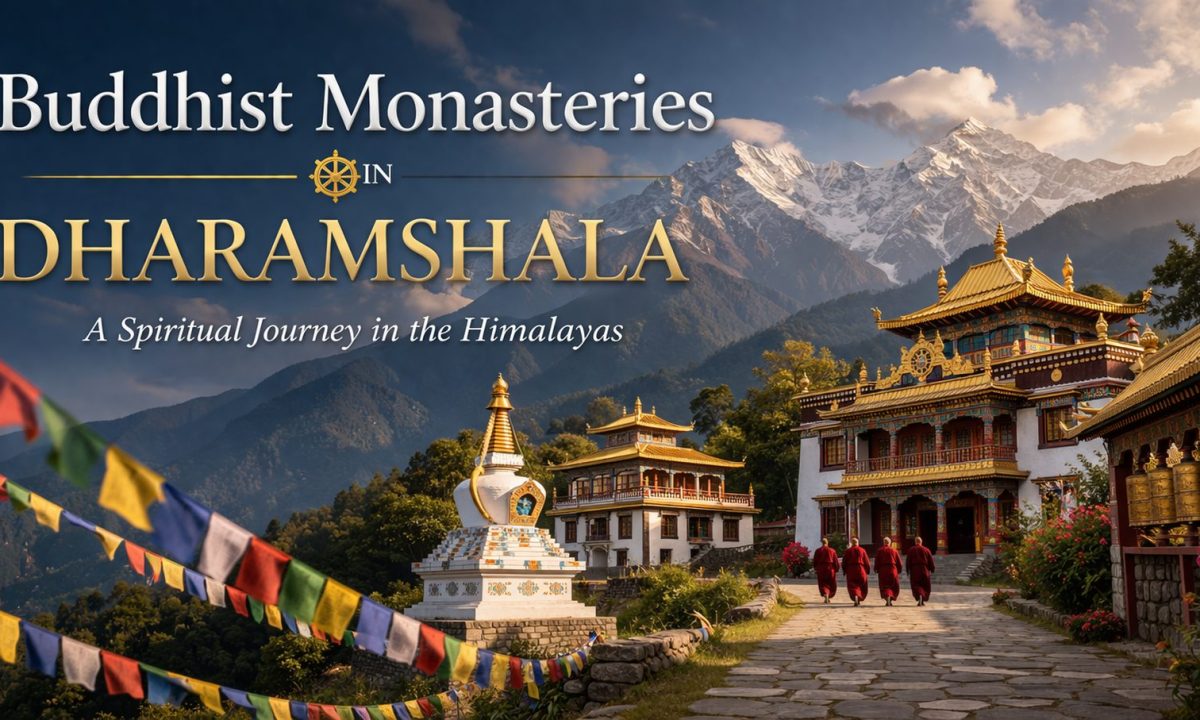
Dharamshala is not just a destination. It is an experience that unfolds gradually as you leave behind the chaos of city life and step into the calm rhythm of the Himalayas. The moment the winding roads begin to climb, and the air turns crisp, something shifts internally. Travelers from around the world come here not only for scenic landscapes but for something deeper, something quieter. The presence of Tibetan culture, with prayer flags fluttering in the wind and the distant sound of chanting, creates an atmosphere that feels both grounding and transformative. This is where the journey into the Buddhist Monasteries in Dharamshala truly begins.
In a world that often feels rushed and overwhelming, finding a place that offers stillness and meaning can be hard to come by. Dharamshala fills that gap effortlessly. Its monasteries are not just places of worship. They are living centers of philosophy, meditation, and cultural preservation. For first-time travelers, especially those unfamiliar with Buddhist traditions, this guide provides clarity, structure, and practical insights. Whether you are traveling solo, with family, as a couple, or as a curious explorer, this blog will help you navigate the most important monasteries, understand their significance, and plan a meaningful journey.
Travel Guide to Buddhist Monasteries in Dharamshala
Dharamshala is divided into two main parts, Lower Dharamshala and McLeodGanj, with the latter serving as the heart of Tibetan culture in India. After the arrival of the Dalai Lama in 1959, this region transformed into a global center for Tibetan Buddhism. Today, it stands as a symbol of resilience, spirituality, and cultural identity.
The Buddhist Monasteries in Dharamshala are deeply rooted in this history. They are not tourist attractions created for visitors. They are active institutions where monks study, practice, and live their daily lives. Understanding this context helps travelers approach these spaces with respect and awareness. It also enhances the experience, allowing you to see beyond the architecture and into the purpose behind it.
When visiting these monasteries, you will notice a pattern. There is a sense of order, silence, and intention. Prayer wheels, incense, and chanting are not just rituals but expressions of mindfulness. For many travelers, even spending a few quiet minutes in these spaces can feel unexpectedly calming.

1. Namgyal Monastery and Tsuglagkhang Complex:
The Namgyal Monastery and Tsuglagkhang Complex form the spiritual core of Dharamshala. This is the personal monastery of the Dalai Lama and one of the most significant Tibetan Buddhist centers in the world. Located in McLeod Ganj, it is easily accessible and often the first stop for visitors.
The complex includes the main temple, prayer halls, a museum, and pathways lined with prayer wheels. Walking through the complex is an experience in itself. Visitors often join locals in walking clockwise around the temple, gently spinning prayer wheels as they go. This act, known as kora, is a form of meditation in motion.
Inside the temple, the atmosphere is peaceful and immersive. Monks chant in low, rhythmic tones, creating a soundscape that feels both grounding and expansive. Visitors are welcome to sit quietly and observe. There is no pressure to participate in rituals. Simply being present is enough.
Exploring the Buddhist Monasteries in Dharamshala often begins here because it provides a comprehensive introduction to Tibetan Buddhist practices. The surrounding area offers cafés, bookstores, and local markets, making it easy to spend an entire day soaking in both spiritual and cultural elements.
2. Gyuto Monastery:
Gyuto Monastery is located a short drive from the main town and offers a quieter, more spacious environment. Known for its focus on tantric meditation practices, this monastery provides a deeper look into advanced aspects of Tibetan Buddhism.
The architecture of Gyuto Monastery is striking, with its golden rooftop and expansive prayer halls. Unlike the central temples, this monastery is less crowded, allowing visitors to experience a greater sense of solitude. The surrounding landscape adds to the serenity, with open views of the mountains and minimal distractions.
The monks here specialize in tantric rituals, which involve intricate chanting and deep concentration. While these practices may not be immediately understandable to visitors, observing them can be a powerful experience. It offers insight into the depth and discipline of Buddhist practice.
Among the Buddhist Monasteries in Dharamshala, Gyuto stands out for its peaceful setting and focus on advanced teachings. It is particularly suitable for travelers who prefer quieter environments and wish to spend time in reflection.
3. Nechung Monastery:
Nechung Monastery holds a unique position within Tibetan Buddhism as the seat of the State Oracle. This monastery is associated with spiritual guidance and decision-making, making it historically significant.
The interiors are richly decorated with murals and symbolic artwork. These visual elements tell stories of protection, wisdom, and spiritual authority. The atmosphere here feels slightly different from other monasteries. There is a sense of intensity and purpose that reflects its role in Tibetan tradition.
Visitors often find Nechung Monastery intriguing because it offers a different perspective on spirituality. It highlights the role of intuition, guidance, and tradition within Buddhism. The monastery is relatively small, so it can be explored within a short time.
Including Nechung in your journey through the Buddhist Monasteries in Dharamshala adds depth and variety. It shows that spirituality here is not limited to meditation but also includes cultural practices that have been preserved for centuries.
4. Tashi Jong Monastery in Bir:
Located about 60 kilometers from Dharamshala, Tashi Jong Monastery offers a peaceful escape from the more crowded areas. The journey to Bir is scenic, with winding roads and views of the valley.
This monastery is part of a Tibetan settlement, which adds authenticity to the experience. Visitors can explore not only the monastery but also the surrounding community. Small cafés, artisan shops, and local homes create a welcoming environment.
The monastery itself is simple yet serene. It is less visited by tourists, making it ideal for those seeking quiet reflection. The pace of life here is slower, allowing travelers to truly disconnect.
Exploring such places expands your understanding of the Buddhist Monasteries in Dharamshala beyond the main town. It shows how Tibetan culture continues to thrive in smaller, less commercialized areas.
5. Sherabling Monastery:
Sherabling Monastery is located near Baijnath and is often considered one of the most beautiful monasteries in Himachal Pradesh. Surrounded by forests, it offers a deeply immersive environment.
This monastery is known for its meditation retreats and structured programs. Visitors from around the world come here to study and practice Buddhism. The architecture is detailed and vibrant, reflecting traditional Tibetan design.
Unlike other monasteries, Sherabling allows for extended stays. This makes it ideal for travelers who want to engage more deeply with spiritual practices. Even a short visit can feel meaningful due to the peaceful surroundings.
Among the Buddhist Monasteries in Dharamshala, Sherabling stands out for its balance of beauty and depth. It is a place where travelers can move beyond observation and into participation.
7. Deer Park Institute:
Deer Park Institute in Bir is a unique addition to the spiritual landscape. Inspired by the ancient Nalanda tradition, it focuses on learning and intellectual exploration.
Visitors can attend workshops, lectures, and meditation sessions. The environment is calm and welcoming, making it accessible even for beginners. This is a place where spirituality meets education.
Including Deer Park in your exploration of the Buddhist Monasteries in Dharamshala adds a different dimension. It allows you to understand the philosophy behind the practices, making the overall experience more meaningful.
8. Rewalsar Monasteries:
Rewalsar, located around 110 kilometers from Dharamshala, is a major pilgrimage site associated with Guru Rinpoche. The monasteries around Rewalsar Lake create a serene and sacred atmosphere.
Walking around the lake, visitors encounter multiple monasteries, each with its own significance. The reflections of the buildings in the water create a calming visual experience.
This destination is slightly farther but worth the journey. It provides a deeper connection to Himalayan Buddhist heritage and expands the scope of your exploration.
How to Reach Dharamshala
Whether you are coming from within India or traveling internationally, there are multiple convenient ways to reach the town. Understanding each option in detail helps you choose what best suits your budget, comfort level, and schedule while preparing for a smooth experience exploring the Buddhist Monasteries in Dharamshala.
By Air
The fastest way to reach Dharamshala is by flying into Gaggal Airport, also known as Kangra Airport. It is located approximately 15 kilometers from the main town and serves as the closest air connectivity point. Regular flights operate from Delhi, making it the most common transit hub for travelers arriving from other parts of India or abroad.
Airlines like IndiGo and SpiceJet frequently operate on this route, and the flight duration from Delhi is about one and a half hours. While booking flights, it is advisable to choose morning departures, as weather conditions in the hills can sometimes lead to delays or cancellations later in the day, especially during the monsoon and winter months.
Once you land at Gaggal Airport, taxis are readily available outside the terminal. The drive to McLeod Ganj or Dharamshala takes around 30 to 45 minutes, depending on traffic and weather. Prepaid taxis are a reliable option, but if you prefer a more organized and comfortable experience, booking in advance is recommended. Many travelers prefer private cab services to ensure a smooth transfer, particularly if arriving with luggage or in a group.
For international travelers, the most practical route is to fly into Delhi’s Indira Gandhi International Airport and then take a connecting domestic flight to Gaggal. This combination reduces travel time significantly and allows you to begin your exploration of the Buddhist Monasteries in Dharamshala without long road fatigue.
By Train
For those who enjoy scenic journeys or prefer a more economical option, traveling by train is a popular choice. The nearest major railway station is Pathankot Junction, located about 85 to 90 kilometers from Dharamshala. Pathankot is well-connected to major cities like Delhi, Amritsar, Chandigarh, and Mumbai through regular trains.
From Delhi, overnight trains such as the Jammu Mail or other express services provide a comfortable journey, allowing you to reach Pathankot early in the morning. Booking AC classes is recommended for better comfort, especially for long-distance travelers.
Once you arrive at Pathankot, you have two main options to reach Dharamshala. The first is to hire a taxi directly from the station, which takes approximately 2.5 to 3 hours. This is the most convenient option, especially for families or those traveling with luggage. The second option is to take a bus from Pathankot bus stand, which is located a short distance from the railway station. Both government and private buses operate frequently, offering budget-friendly travel.
There is also a narrow-gauge toy train that runs from Pathankot to Kangra Valley, which is a unique and scenic experience. However, it is slower and more suited for travelers who have extra time and want to enjoy the journey itself rather than prioritize speed.
Choosing the train route gives you flexibility and often reduces travel costs, making it a preferred option for backpackers and budget travelers heading toward the Buddhist Monasteries in Dharamshala.
By Road and Bus
Road travel to Dharamshala is one of the most popular and accessible options, especially for travelers coming from nearby cities like Delhi, Chandigarh, and Amritsar. The road network is well-maintained, and the journey offers beautiful views as you approach the hills.
From Delhi, the distance to Dharamshala is approximately 470 kilometers, and the journey takes around 10 to 12 hours, depending on traffic and stops. Overnight Volvo buses operated by Himachal Road Transport Corporation and private companies are widely available. These buses are comfortable, equipped with reclining seats, and ideal for travelers who want to save on accommodation costs by traveling overnight.
Booking Volvo buses in advance is highly recommended, particularly during peak tourist seasons. Boarding points in Delhi are usually located in areas like Majnu Ka Tila, Kashmiri Gate, and RK Ashram Marg. For first-time travelers, Majnu Ka Tila is especially convenient due to its proximity to Tibetan markets and food options.
For those driving their own vehicles, the route from Delhi via Chandigarh and Pathankot is the most common. While the roads are generally good, the final stretch into the hills involves winding turns, so driving experience in mountainous terrain is beneficial.
Traveling by road offers flexibility and allows you to stop at scenic points along the way. It also provides a gradual transition into the peaceful environment that defines the Buddhist Monasteries in Dharamshala.
By Taxi and Local Transport
Hiring a taxi is one of the most comfortable and convenient ways to explore Dharamshala and its surrounding monasteries. While local taxis are easily available, booking a reliable service in advance ensures better pricing, safety, and flexibility.
For travelers planning to visit monasteries located outside the main town, such as those in Bir, Baijnath, or Rewalsar, having a dedicated taxi is highly recommended. Public transport options to these locations are limited and may not align with your schedule.
Booking a Taxi Service in Dharamshala is a practical choice for exploring remote monasteries comfortably. It allows you to travel at your own pace, spend more time at places of interest, and avoid the hassle of multiple transfers. Drivers are usually familiar with the routes and can also suggest local spots for food, viewpoints, and short breaks.
Within Dharamshala and McLeod Ganj, short-distance travel can be managed through auto-rickshaws and shared cabs. However, for a seamless experience, especially if you are on a tight itinerary, private taxis remain the most efficient option.
Choosing the right mode of transport not only makes your journey smoother but also enhances your overall experience as you move between the serene and culturally rich Buddhist Monasteries in Dharamshala.
Total Cost Breakdown in INR
Planning a trip budget helps travelers enjoy Dharamshala without unnecessary stress, especially when exploring the Buddhist Monasteries in Dharamshala spread across different locations. A 4 to 5-day trip can be customized based on your travel style, comfort level, and preferences.
For budget travelers, the total cost typically ranges between INR 12,000 and INR 15,000 per person. This includes staying in hostels or budget guesthouses, eating at local cafés, and using shared transport or buses. It is a practical option for solo travelers and backpackers who prioritize experience over luxury. Mid-range travelers can expect to spend between INR 18,000 and INR 25,000. This allows for comfortable hotel stays, a mix of local and multi-cuisine dining, and occasional private taxi use for visiting monasteries outside the main town.
Luxury travelers may spend INR 30,000 or more, enjoying premium hotels, private cabs for the entire trip, and fine dining experiences. Food remains affordable overall, with meals ranging from INR 150 at local spots to INR 600 or more at upscale cafés. Daily taxi costs generally fall between INR 1,500 and INR 3,500, depending on distance and itinerary.
Best 3 to 5 Day Itinerary
A well-structured itinerary can completely transform your experience in Dharamshala, especially when visiting multiple spiritual sites spread across different locations. The goal is to balance exploration, rest, and travel time so your journey through the Buddhist Monasteries in Dharamshala feels smooth, not rushed or overwhelming. This day-by-day plan is designed to help first-time travelers navigate efficiently while still leaving room for meaningful moments.
Day 1: Arrival, Acclimatization, and McLeod Ganj Exploration
Your first day should be light and focused on adjusting to the altitude and environment. Try to arrive in Dharamshala or McLeod Ganj by late morning or early afternoon, whether by flight, train plus taxi, or overnight bus. After checking into your hotel, take some time to rest, freshen up, and hydrate properly, as the mountain air can feel different, especially for travelers coming from plains or coastal regions.
Begin your exploration in the afternoon with a visit to the Namgyal Monastery and Tsuglagkhang Complex. This is the spiritual heart of the town and the perfect introduction to Tibetan Buddhism. Walk slowly through the परिसर, observe the monks chanting, and participate in the kora by walking clockwise around the temple while spinning prayer wheels. Avoid rushing here. Spend at least one to two hours simply observing and absorbing the environment.
In the evening, explore the local streets of McLeod Ganj. Visit small cafés for a relaxed dinner. Popular areas around the main square offer a mix of Tibetan and international cuisine, making it easy for all types of travelers. Keep your first day calm and avoid over-planning so your body can adjust naturally.
Day 2: Gyuto Monastery and Nechung Monastery with Local Exploration
Start your second day early with a proper breakfast, as you will be covering locations slightly outside the main town. Hire a taxi for the day to avoid delays and make travel smoother. Head first to Gyuto Monastery, which is about 20 to 30 minutes away, depending on your location.
Spend your morning at Gyuto Monastery, taking time to explore the large prayer halls and peaceful surroundings. Since it is less crowded, you can sit quietly and reflect without interruptions. Early morning visits are ideal because the light enhances the beauty of the monastery,y and the environment is at its calmest.
From Gyuto, continue to Nechung Monastery. The distance is short, and visiting both on the same day saves time and travel effort. Nechung offers a different experience, with its strong cultural and historical significance. Walk through the interiors, observe the detailed murals, and take your time understanding the unique role of the monastery.
Return to McLeodGanj by afternoon. Use the rest of the day to explore nearby spots like Bhagsu Nag Temple or Bhagsu Waterfall if you have energy. Otherwise, keep the evening relaxed with a café visit or a quiet walk. This balance ensures you do not feel exhausted while exploring the Buddhist Monasteries in Dharamshala.
Day 3: Bir Excursion with Tashi Jong Monastery and Deer Park Institute
Day three is dedicated to a slightly longer but highly rewarding journey to Bir, located about 60 kilometers from Dharamshala. Start early, ideally around 7:00 AM, to make the most of your day. Booking a private taxi is highly recommended for comfort and flexibility, as public transport can be time-consuming and less predictable.
The drive to Bir takes approximately 2.5 to 3 hours and is filled with scenic views of valleys and villages. Your first stop should be Tashi Jong Monastery. This monastery is peaceful and less crowded, making it perfect for quiet reflection.
After spending time at Tashi Jong, head to Deer Park Institute. This place offers a more intellectual approach to Buddhism, with opportunities to attend sessions or simply explore the campus. Even if you do not join a program, the calm environment makes it worth visiting.
Have lunch in Bir, where you will find several cozy cafés offering both local and international dishes. Bir is also known for paragliding, so you may see colorful gliders in the sky, adding a unique charm to the experience.
Begin your return journey by late afternoon to avoid driving in the hills after dark. You will reach Dharamshala by evening, making it a fulfilling yet well-paced day.
Day 4: Sherabling Monastery for Deep Spiritual Immersion
On the fourth day, plan a visit to Sherabling Monastery near Baijnath. This is another long-distance trip, so starting early is important. Leave around 7:00 AM and book a reliable taxi for the entire day.
The journey takes around 3 to 4 hours, but the drive itself is scenic and peaceful. Once you reach Sherabling, you will immediately notice the difference in atmosphere. Surrounded by forests, the monastery feels deeply immersive and calm.
Spend several hours here exploring the architecture, sitting in meditation spaces, and observing the environment. If you are interested in deeper engagement, inquire about meditation sessions or short retreats. Even a few hours spent here can feel transformative.
Have a simple meal nearby or carry light snacks, as options around the monastery may be limited compared to McLeod Ganj. Begin your return journey by mid-afternoon to reach back comfortably before evening.
This day adds depth to your exploration of the Buddhist Monasteries in Dharamshala, allowing you to move beyond sightseeing into a genuine spiritual experience.
Day 5: Rewalsar Monasteries or Leisure Day
If you have a fifth day, you have two options, depending on your energy and interest. If you are eager to explore more, plan a trip to Rewalsar, located about 110 kilometers away. This is a full-day excursion and requires an early start, ideally before 6:30 AM.
Rewalsar Lake is surrounded by monasteries and holds deep spiritual significance. Walk around the lake, visit different monasteries, and take time to sit quietly by the water. The peaceful reflections and slower pace create a perfect ending to your journey.
Alternatively, if you prefer a relaxed day, stay in McLeod Ganj. Use this time for café hopping, shopping for Tibetan handicrafts, or revisiting your favorite monastery. This flexibility ensures your trip does not feel rushed at the end.
Best Time to Visit
The ideal time to visit Dharamshala is during the spring and autumn months, from March to June and September to November, when the weather is pleasant, skies are clear, and the mountain views are at their best. During this period, temperatures remain comfortable for sightseeing, monastery visits, and outdoor exploration, making it perfect for travelers planning to explore the Buddhist Monasteries in Dharamshala without weather disruptions.
Spring brings blooming landscapes and fresh mountain air, while autumn offers crisp weather and excellent visibility of the Dhauladhar ranges. These seasons are especially suitable for first-time visitors, families, and international travelers.
Winter, from December to February, transforms Dharamshala into a snowy retreat, particularly in higher areas like McLeod Ganj. While the snowfall creates a magical atmosphere, it also brings colder temperatures, often dropping close to freezing. Travelers visiting during this time should carry proper winter clothing and be prepared for occasional travel delays due to weather conditions.
Travel Tips for Dharamshala
- Start your day early, ideally before 8 AM, to experience peaceful monastery environments and avoid crowds and traffic.
- Carry small cash (INR 10, 20, 50) for donations, local shops, and areas with poor network connectivity.
- Do not rely fully on Google Maps for walking routes; ask locals for easier and safer रास्ते.
- Keep a reusable water bottle and refill at cafés or natural water points to save money and reduce plastic use.
- Eat light meals on arrival, such as thukpa or soup, to help your body adjust to the altitude.
- Always walk clockwise around prayer wheels and monastery paths to follow local customs respectfully.
- Download offline maps and save hotel contact details due to a weak network in remote areas.
- Carry a light scarf or shawl for warmth and for use inside religious spaces when needed.
- Try small local Tibetan kitchens instead of only popular cafés for more authentic and affordable food.
- Book taxis in advance for distant monastery visits to avoid last-minute delays or high prices.
- Avoid overpacking your itinerary; keep buffer time to relax and explore at your own pace.
- Wear comfortable shoes with good grip, as many paths are steep and uneven.
- Keep basic medicines for motion sickness, as hill roads can be winding.
- Travel during daylight for long routes like Bir or Rewalsar for better safety and views.
- Respect silence inside monasteries and always check before taking photographs.
Do’s and Don’ts
Do’s
Respect local customs and traditions at all times, especially while visiting the Buddhist Monasteries in Dharamshala. Walk clockwise around prayer wheels and monastery paths, as this is an important spiritual practice. Maintain silence inside prayer halls and observe rituals quietly. Dress modestly, covering shoulders and knees when possible. You may offer small donations as a gesture of respect, though it is completely optional. Always follow signage and instructions given by monks or staff to ensure a smooth and respectful visit.
Don’ts
Avoid loud conversations, phone calls, or any disruptive behavior inside monastery premises. Do not touch sacred objects unless permitted. Photography may be restricted, so always ask before clicking pictures. Smoking, alcohol, and littering are strictly prohibited.
Conclusion:
Dharamshala offers more than just scenic beauty. It provides an opportunity to slow down, reflect, and connect with something deeper. The Buddhist Monasteries in Dharamshala are at the heart of this experience, offering spaces where spirituality, culture, and nature come together.
For travelers, the key is to approach this journey with openness and respect. Take the time to sit quietly, observe, and absorb the atmosphere. Whether you are seeking peace, knowledge, or simply a unique travel experience, Dharamshala delivers in a way that feels both authentic and lasting.
With thoughtful planning, comfortable travel arrangements like Groove Taxi Services, and a willingness to explore beyond the surface, your journey through these monasteries can become one of the most meaningful experiences of your life.
Frequently Asked Questions (FAQs)
1. Which are the best Buddhist monasteries in Dharamshala?
The most popular Buddhist monasteries in Dharamshala include Namgyal Monastery, Gyuto Monastery, Nechung Monastery, Sherabling Monastery, and Tashi Jong Monastery. These monasteries offer a mix of spiritual learning, peaceful environments, and cultural experiences for visitors.
2. Is Dharamshala good for spiritual travel?
Yes, Dharamshala is one of the best destinations in India for spiritual travel. It is home to the Dalai Lama and serves as a major center of Tibetan Buddhism, offering meditation centers, monasteries, and a peaceful Himalayan environment ideal for self-reflection.
3. How many days are enough for Dharamshala?
A 3 to 5-day trip is ideal to explore Dharamshala comfortably. This duration allows you to visit the main Buddhist monasteries, explore McLeod Ganj, and take short trips to nearby places like Bir and Baijnath.
4. Can tourists visit monasteries in Dharamshala?
Yes, tourists are welcome to visit most Buddhist monasteries in Dharamshala. Visitors should maintain silence, dress modestly, and respect local customs while exploring these spiritual places.
5. What is the best time to visit Buddhist monasteries in Dharamshala?
The best time to visit Buddhist monasteries in Dharamshala is from March to June and September to November when the weather is pleasant and suitable for sightseeing and travel.
6. Are there meditation programs available in Dharamshala monasteries?
Yes, some monasteries and institutes like Tushita Meditation Centre and Sherabling Monastery offer meditation programs, retreats, and workshops for beginners and advanced practitioners.

As a locally rooted taxi service, Groove Taxi Services shares insider knowledge of Dharamshala and the Kangra Valley. From hidden gems to popular attractions, our team helps travelers discover authentic experiences with comfort and convenience. Backed by excellent customer reviews on Google and Justdial, we are known for reliable service, professional drivers, and a commitment to customer satisfaction.