
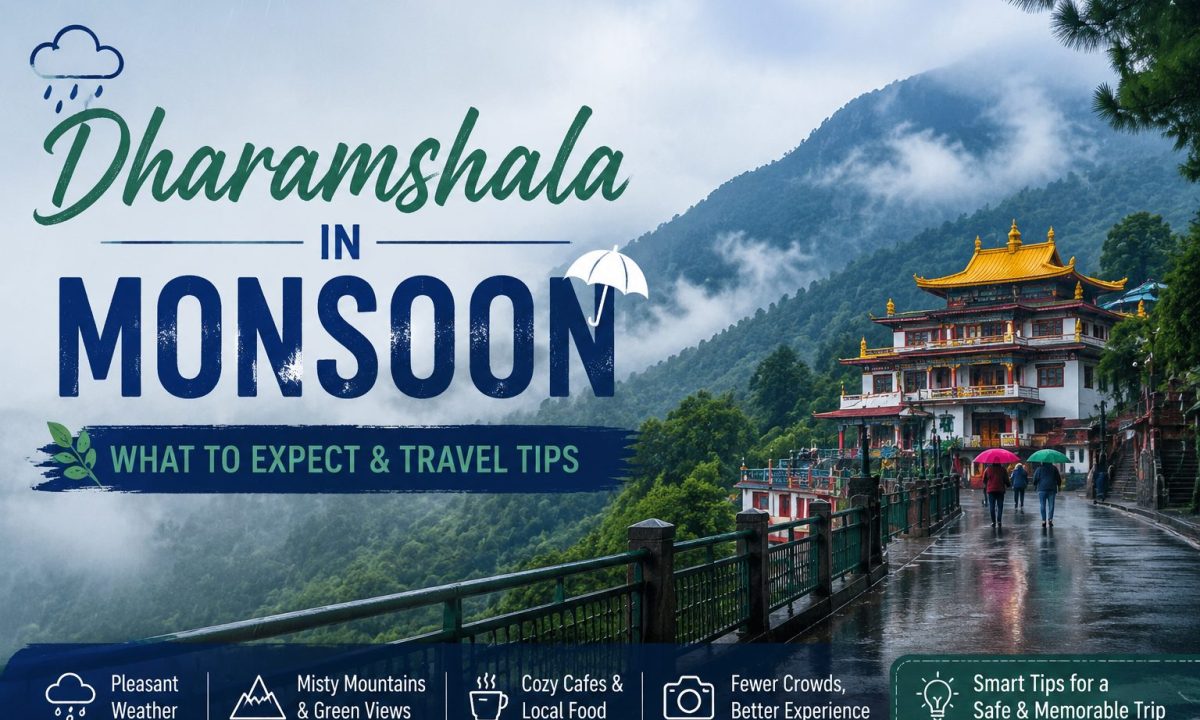
Dharamshala in monsoon is one of the most dramatic, lush, and unforgettable versions of this Himalayan town you will ever witness. From late June to mid-September, the Kangra Valley transforms into a sweeping canvas of emerald green — waterfalls roar down the Dhauladhar range, mist rolls through the cedar forests of McLeodganj, and the entire landscape feels freshly washed and alive.
But monsoon travel here comes with real challenges. Roads flood. Landslides close mountain passes. Rivers run fast and unpredictable. For tourists flying in from around the world to experience “Little Lhasa,” navigating this season confidently requires knowing what to expect — and having the right transport partner by your side.
This guide covers everything: when monsoon hits, what changes in the hills, which attractions are accessible, which routes get risky, and how to travel safely using a reliable local taxi service. Let’s get into it.
When Is Monsoon Season in Dharamshala?
Dharamshala receives some of the heaviest rainfall in Himachal Pradesh. The monsoon arrives typically in the last week of June and withdraws around mid-September, with the peak intensity falling in July and August.
| Month | Rainfall Pattern | What to Expect |
|---|---|---|
| Late June | Onset | Sporadic heavy showers, greenery begins |
| July | Peak monsoon | Heaviest rain, frequent landslides possible |
| August | Peak monsoon | Continued heavy rain, roads can close |
| September | Retreating | Rain eases, landscapes lush, fewer crowds |
Average rainfall during July and August can exceed 500mm per month — far higher than what most lowland cities see in an entire year. If you are planning Dharamshala monsoon travel, these numbers matter.
What Makes Monsoon in Dharamshala Special
The landscape is breathtaking
The hillsides turn an impossible shade of green. Waterfalls that are dry for the rest of the year come alive. The Dhauladhar peaks, often visible on clear winter mornings, vanish into dramatic storm clouds. For photographers and nature lovers, monsoon Dharamshala offers scenes that simply do not exist in any other season.
Fewer tourists, lower prices
International visitor numbers drop sharply during monsoon. This is actually a significant advantage — you will find hotels available at 30–50% less than peak season rates, and popular spots like Bhagsu Waterfall or Mcleodganj’s main square will have far fewer visitors. The town breathes differently in the rain.
Cool temperatures throughout
While the plains of India bake in summer heat, Dharamshala stays refreshingly cool — daytime temperatures range between 16°C and 24°C. If you are escaping the heat of Delhi or Amritsar, monsoon is a genuinely comfortable time to visit.
The spiritual atmosphere deepens
Rain falling on the slate rooftops of McLeodganj, the sound of bells from Namgyal Monastery, monks walking through morning mist — the monsoon season gives Dharamshala a contemplative quality that feels deeply connected to its Tibetan Buddhist identity. For travellers visiting for spiritual or wellness reasons, this slow, rainy season can be the most meaningful time of all.
What to Expect: The Honest Challenges
Road closures and landslides
This is the biggest reality of monsoon travel in the Himalayas. The roads between Dharamshala and Manali, the high-altitude passes toward Spiti, and several routes toward Dalhousie are vulnerable to landslides and flash floods.
Our drivers at Groove Taxi Services monitor road conditions daily during monsoon. If a route is blocked or unsafe, we will proactively reroute or reschedule — your safety is not negotiable. Always check road conditions before departing on any mountain route, and never attempt unmarked or unfamiliar roads in heavy rain without a local driver who knows the terrain.
Trekking trails become risky
Popular trails like the Triund route and Kareri Lake trek become slippery and potentially dangerous during peak monsoon. Trail markers can wash out, and mountain weather can shift from clear to stormy within minutes.
Flooding in lower areas
The Kangra Valley floor, including areas around Dharamshala town and the road to Gaggal Airport, can experience waterlogging after particularly heavy downpours. This is usually temporary but can delay travel timing.
Best Places to Visit in Dharamshala During Monsoon
Despite the rain, there is a great deal to see and do — and in some cases, the monsoon makes these places even more beautiful.
1. Namgyal Monastery and the Dalai Lama Temple Complex
Rain does not stop the spiritual heart of McLeodganj from welcoming visitors. The Namgyal Monastery complex is one of the most important Tibetan Buddhist sites outside Tibet, and its interior courtyards, prayer halls, and resident monks provide a deeply moving experience regardless of weather. The walk up to it through narrow McLeodganj lanes in light rain is atmospheric rather than inconvenient.
If you are exploring McLeodganj and wondering what else to do around town, our guide on things to do in McLeodganj covers the full range of activities, most of which remain accessible during monsoon.
2. Buddhist Monasteries Across Dharamshala
Beyond Namgyal, the wider Dharamshala area is home to several beautiful monasteries set against forested hillsides — and monsoon greenery frames them perfectly. Gyuto Monastery, Tushita Meditation Centre, and Norbulingka Institute are all worth visiting, and the misty mountain backdrop in monsoon gives them an other-worldly quality.
Our detailed guide to Buddhist monasteries in Dharamshala will help you plan which ones to prioritise and how to reach each one — our taxis cover all monastery routes.
3. Bhagsu Waterfall
Bhagsu Waterfall is arguably at its most spectacular during and just after monsoon. The cascade swells massively with rainwater, and the rocks around it glisten with moss and mist. Go in the morning when the rain briefly eases, and keep a safe distance from the water’s edge.
4. Dharamkot Village and Its Cafes
Perched above McLeodganj, Dharamkot is loved by long-stay travellers and the yoga-retreat crowd. Its cafes — serving momos, thukpa, and strong Tibetan butter tea — are exactly where you want to be when it’s raining outside. Warm, candlelit, and full of travellers from around the world who have collectively decided that staying indoors today is a perfectly valid plan.
Our guide to the best restaurants in Dharamkot and how to reach them by taxi has everything you need — including how our taxi service handles the steep, sometimes slippery road up to Dharamkot on rainy days.
5. Kangra Fort
Located in lower Kangra district, Kangra Fort is one of the oldest and largest forts in the Himalayas. Its elevation is lower than McLeodganj, so it is generally accessible even when upper roads are disrupted. The fort looks dramatic in moody monsoon light, with storm clouds gathering behind its ancient walls.
For a broader list of all the sightseeing options across Dharamshala and Kangra district, see our complete guide to Dharamshala sightseeing attractions, which also includes opening times and our recommended order for a full-day itinerary.
Monsoon Road Safety: What Every Traveller Needs to Know
This is where having a local, experienced taxi driver is not just convenient — it is genuinely important for your safety.
Five non-negotiable rules for road travel in monsoon Dharamshala
1. Never drive yourself on mountain roads during peak rain.
Even if you are comfortable driving on flat roads, narrow Himalayan roads with active landslide zones are a different skill entirely. Local drivers read the terrain — they know which bends flood first, which slopes are unstable, and when to pull over and wait.
2. Always start journeys in the morning.
Rain in the Kangra hills tends to be lighter in the morning and heaviest in the afternoon. Schedule any longer drives — to Dalhousie, Khajjiar, or toward Manali — as early morning departures whenever possible.
3. Keep your travel plans flexible.
A road that was open at 8 AM can be blocked by a rockfall by noon. Build buffer time into your itinerary and accept that monsoon travel means adapting. Our drivers will always contact you if a planned route becomes unsafe.
4. Avoid Rohtang Pass and high-altitude routes.
If your plan includes a trip from Dharamshala to Manali, be aware that Rohtang Pass often closes during heavy monsoon spells. Our team will check the Manali-Leh Highway status before your trip and advise accordingly.
5. Keep your driver’s number saved.
If you are out walking and weather deteriorates suddenly, you want to be able to call for a pickup immediately rather than trying to book something new in patchy mobile signal.
Best Taxi Routes to Plan During Monsoon
Certain routes remain reliably accessible during monsoon, while others require careful timing. Here is how we think about it:
Reliable routes (most days, with local driver)
- Dharamshala to McLeodganj and Dharamkot — short, lower-altitude roads
- Dharamshala to Kangra Fort and Kangra town — lower valley, minimal landslide risk
- Dharamshala to Gaggal Airport — essential arrival/departure route, maintained well
- Dharamshala local sightseeing — monasteries, cafes, viewpoints within town
Possible with good weather and morning timing
- Dharamshala to Khajjiar (via Dalhousie, ~3 hours) — the “mini Switzerland of India” is lush and beautiful in monsoon, but check the road via Banikhet before departing
- Dharamshala to Dalhousie tour package — a popular multi-day route; best done in early morning starts with overnight stays
- Dharamshala to Delhi taxi — the NH154A highway to Pathankot and then NH44 south is generally reliable, though the final descent from the hills can be slow in heavy rain
Check conditions before booking
- Dharamshala to Manali — multiple passes, landslide-prone in July-August; our team will advise
- Shimla-Manali-Dharamshala-Dalhousie circuit — if you are doing the full 10-day Himachal itinerary, we strongly recommend doing this route in September when monsoon eases but the hills are still green
If you are arriving from Amritsar, our guide on how to travel from Amritsar to Dharamshala includes specific monsoon timing advice for the Pathankot-Dharamshala stretch.
What to Pack for Monsoon Travel in Dharamshala
Here is a practical packing checklist for the rainy season:
- Waterproof rain jacket — not just an umbrella; wind and sideways rain make umbrellas impractical on hillside walks
- Waterproof day bag — to protect cameras, phones, and documents
- Quick-dry clothes — cotton stays wet for hours; merino wool or synthetics are far better
- Waterproof hiking shoes — standard sneakers become useless on muddy trails within minutes
- Insect repellent — mosquito presence increases with monsoon
- Warm layer — evenings in McLeodganj can drop to 14-16°C even in July; a fleece is essential
- Power bank — rain delays and longer indoor stays mean more screen time
- Plastic zip-lock bags — for passport, cash, and electronics as extra insurance
Accommodation Tips for Monsoon
Book hotels in McLeodganj or upper Dharamshala rather than the lower Dharamshala town area — you will be better placed for the monasteries, cafes, and restaurants you will naturally spend time in when rain keeps you indoors. Rates drop significantly in monsoon, so mid-range and boutique guesthouses that are normally booked weeks out are usually available on short notice.
If you are planning a longer Himachal trip that takes you through multiple hill stations, our Dharamshala McLeodganj Dalhousie tour package covers a 3–5 day circuit that works well in early monsoon (June) or late monsoon (late September) when conditions are more settled.
Is Monsoon the Right Time for You? Honest Verdict
Monsoon in Dharamshala is ideal if you:
- Love dramatic landscapes and don’t mind getting wet
- Are visiting primarily for monasteries, cafes, culture, and meditation
- Want fewer crowds and lower prices
- Are flexible with your day-to-day plans
- Are travelling with a trusted local driver who knows the terrain
It is better avoided during peak July-August if you:
- Plan to do high-altitude treks (Triund, Kareri)
- Are driving yourself in an unfamiliar vehicle
- Have a very tight, fixed itinerary with no flexibility
- Are combining with a Manali or Spiti Valley trip
Book Your Monsoon Taxi in Dharamshala
Travelling safely through the Himalayas during monsoon comes down to one thing: the person behind the wheel. Groove Taxi Services operates year-round across Dharamshala, McLeodganj, Kangra, Dalhousie, and beyond. Our drivers are local to the hills, trained for mountain road conditions, and in daily contact with highway authorities during the monsoon season.
Whether you need an airport pickup at Gaggal, a full-day local sightseeing run, or a multi-day tour through the Himachal hill stations, we are here — rain or shine.
Frequently Asked Questions About Dharamshala Monsoon Travel
Is Dharamshala safe to visit during monsoon?
Yes, Dharamshala is generally safe to visit during monsoon, provided you take sensible precautions. The town itself — including McLeodganj, the monasteries, and most cafes and restaurants — remains fully accessible throughout the season. The key risks are on mountain roads and high-altitude trekking trails, both of which require an experienced local driver and weather-aware planning. Avoid attempting mountain routes on your own and always check road conditions before longer journeys. Travelling with a trusted local taxi service is by far the safest approach.
What is the weather like in Dharamshala in July and August?
July and August are the peak monsoon months in Dharamshala. Daytime temperatures range between 16°C and 24°C, making it much cooler than the Indian plains. Rainfall is heavy and frequent — the area receives some of the highest rainfall in Himachal Pradesh, often exceeding 500mm per month during peak monsoon. Mornings tend to be clearer than afternoons, so plan outdoor activities for early in the day.
Which roads get closed during Dharamshala monsoon?
The routes most vulnerable to closures are the Dharamshala–Manali highway (which crosses Rohtang Pass), the roads toward Spiti Valley, and certain high-altitude stretches between Dalhousie and Khajjiar. The lower-altitude roads — including the main town roads, Dharamshala to Kangra, and the highway toward Pathankot — are generally maintained and remain open. Our drivers monitor road status daily and will reroute or reschedule if any route becomes unsafe.
Is Triund trek possible during monsoon?
Triund trek is not recommended during peak monsoon (July–August). The trail becomes extremely slippery, visibility can drop suddenly, and the risk of landslides on the approach is real. The trailhead in Dharamkot is accessible by taxi, but most experienced guides advise waiting until October for the Triund trek. If trekking is your primary goal, plan your visit for October–November or March–May instead.
Can I visit Khajjiar from Dharamshala during monsoon?
Yes, a Dharamshala to Khajjiar day trip is possible during monsoon, and many tourists find Khajjiar (“the mini Switzerland of India”) at its most beautiful when the meadows are lush green from the rains. The best approach is an early morning departure before afternoon rain intensifies, travelling with a local driver familiar with the Banikhet road. See our dedicated guide to the Dharamshala to Khajjiar taxi day trip for full details on timings and route.
How much cheaper are hotels in Dharamshala during monsoon?
Hotel rates in Dharamshala and McLeodganj typically drop by 30–50% during the monsoon season compared to peak winter and spring rates. Mid-range and boutique guesthouses that normally require advance booking are often available on short notice. This makes monsoon an excellent time for budget-conscious travellers who are comfortable with the rain.
Are taxis available in Dharamshala throughout monsoon?
Yes. Groove Taxi Services operates year-round, including through the full monsoon season. We handle airport pickups at Gaggal, local sightseeing, and inter-city routes. During monsoon, our drivers carry updated road condition information and will proactively advise if a planned route needs to be adjusted. You can book in advance or on short notice — we are always available.
What is the best month to visit Dharamshala to avoid rain but still see greenery?
September is widely considered the sweet spot. The monsoon begins withdrawing in early September and is mostly gone by mid-September. The hills are still deeply green, waterfalls are still flowing, temperatures are pleasant, and the crowds have not yet returned for the October–November peak season. If you want the beauty of monsoon without the intensity of July–August rain, plan for the second half of September.
Can I do the Dharamshala–Dalhousie–Khajjiar circuit during monsoon?
The Dharamshala–Dalhousie circuit is doable in monsoon with careful planning. We recommend doing it in September when rain eases, or in June before peak monsoon hits. If you are flexible and travelling with a local driver, it can also be done in July–August with early morning starts and overnight stays. Our Dharamshala Dalhousie tour package covers the full route and can be customised for monsoon travel timing.
What should I eat in Dharamshala during monsoon?
Monsoon is a wonderful time for Dharamshala’s Tibetan and Himachali food scene. Hot thukpa (Tibetan noodle soup), steamed momos, butter tea, and Himachali dal chawal are perfect for rainy, cool evenings. The cafes of McLeodganj and Dharamkot are atmospheric and warm — ideal spots to wait out heavy afternoon rain. For restaurant recommendations and how to reach them, see our Dharamkot restaurant guide with taxi directions.
Book Your Monsoon Taxi in Dharamshala
Travelling safely through the Himalayas during monsoon comes down to one thing: the person behind the wheel. Groove Taxi Services operates year-round across Dharamshala, McLeodganj, Kangra, Dalhousie, and beyond. Our drivers are local to the hills, trained for mountain road conditions, and in daily contact with highway authorities during the monsoon season.
Whether you need an airport pickup at Gaggal, a full-day local sightseeing run, or a multi-day tour through the Himachal hill stations, we are here — rain or shine.
📞 Book your Dharamshala taxi today →
Related Posts You Will Find Useful
- Things to do in McLeodganj
- Buddhist Monasteries in Dharamshala – Complete Guide
- Dharamshala Sightseeing Attractions
- Taxi Service from Dharamshala to Manali
- Dharamshala to Khajjiar – Mini Switzerland Day Trip
- Dharamshala to Delhi Taxi – One Way and Round Trip
- Best Restaurants in Dharamkot and How to Reach Them by Taxi
- Dharamshala–Dalhousie Tour Package
- 10-Day Itinerary: Shimla–Manali–Dharamshala–Dalhousie

As a locally rooted taxi service, Groove Taxi Services shares insider knowledge of Dharamshala and the Kangra Valley. From hidden gems to popular attractions, our team helps travelers discover authentic experiences with comfort and convenience. Backed by excellent customer reviews on Google and Justdial, we are known for reliable service, professional drivers, and a commitment to customer satisfaction.